

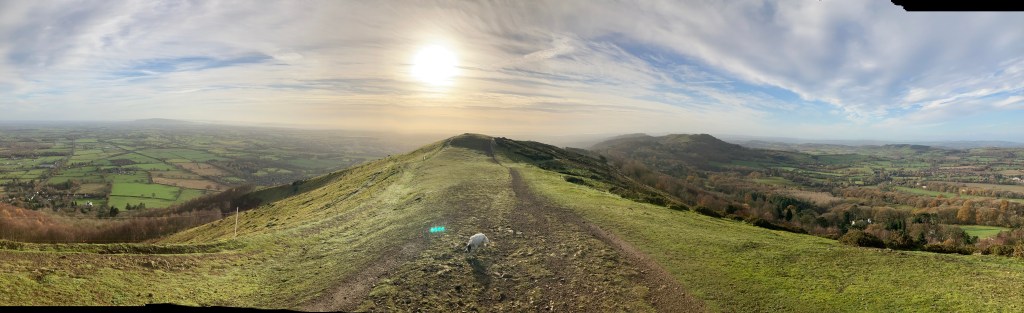
The photo on the homepage, and above, is of a place I return to time and again. From there, the land falls away on either side, revealing a patchwork of pleasant fields and hedgerows — Herefordshire and Wales to the west, Worcestershire to the east, and, on a clear day, the view extends as far as the Cotswolds and Oxfordshire.
This is the Malvern Hills.
This quiet part of the British countryside has been part of my life for as long as I can remember.
Childhood and beyond, on the hills
My paternal grandmother used to take me there when I was little more than a toddler, back in the seventies. Gran and a friend in the front of her little Austin 1100, while the back seat would be crammed with four excited children, and a picnic stowed neatly in the boot.
We’d settle somewhere halfway up towards the Worcestershire Beacon, lay out the blanket and the sandwiches, and then launch ourselves down the grassy slopes on shiny, greased tin trays — coming to a calamitous halt in beds of bracken, amid shrieks of laughter.
Those halcyon days of childhood are etched forever in my memory.
Years later, as a teen, I would return to the hills with friends for late-night escapades involving alcohol and exotic, hand-rolled cigarettes. Late summer evenings, intoxicated and befuddled by herbs from the Golden Triangle, looking out over the lights of Great Malvern below and the rest of Worcestershire in the distance, trying to imagine all the history witnessed by those hills over countless millennia before my birth.
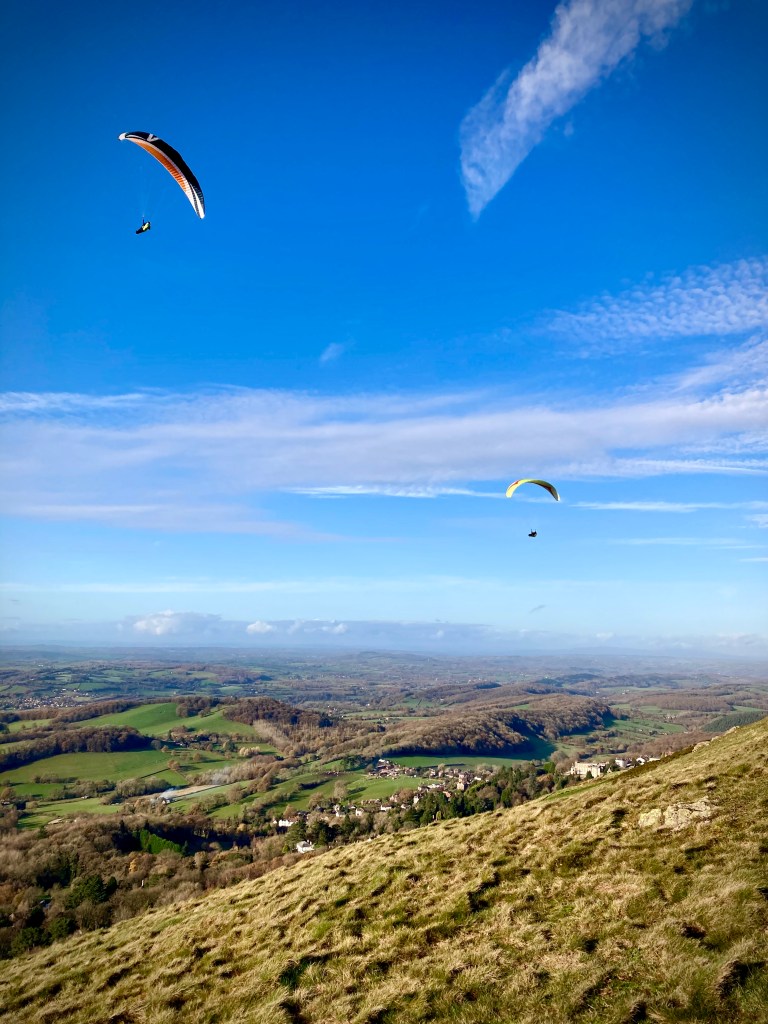
Looking towards the Worcestershire beacon, with paragliders circling.

A walk through time
These days, I walk the Malvern Hills with my dog. The views are the same, but somehow more meaningful. The wind still carries skylark song, and the bracken’s still in abundance. And though Gran has long since departed, she walks with me in spirit.
Those ancient hills — of Precambrian rock, tufted with bracken and moss, oak and ash — have stood sentry over this part of Albion for many millions of years.
Their spring water once filled Victorian spas, and quenched the thirst of the late Queen Elizabeth II. They are said to have inspired Tolkien’s White Mountains of Gondor, enchanted C.S. Lewis, and stirred the emotions of Edward Elgar.
And it’s easy to see why. Even the light here feels somehow storied.
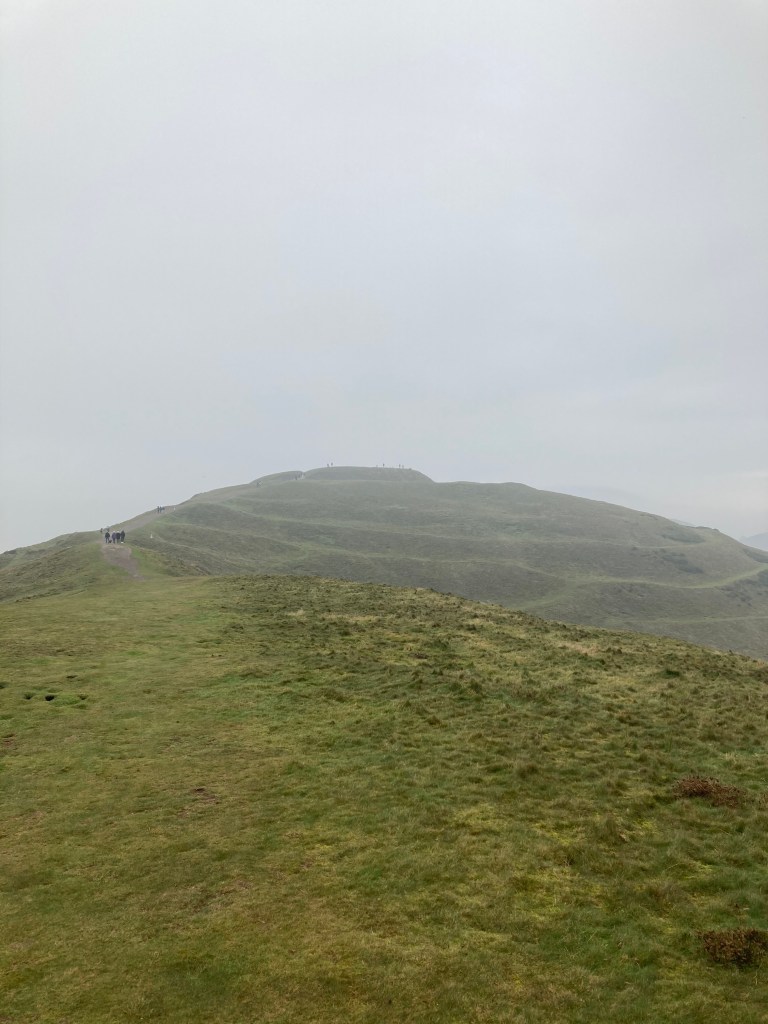
I like to imagine Elgar composing Caractacus while meandering the slopes of British Camp — the old Iron Age hill fort, which dates back to the 2nd century BC — as the wind breezed across from Wales.
Walking towards the Iron Age British Camp hill fort.
Why begin here?
Naturally, it felt apt to begin Notes from Foggy Albion from this high ground.
Despite many years living abroad and visiting a plethora of beautiful places, nothing I’ve seen evokes quite the same feelings in me as the sight of those majestic old hills. A place dear to my heart, and one that hums with local legend.
A landscape of larks and lore, and of tin trays and Tolkien.
Paragliders enjoying the thermals, Herefordshire and Wales in the distance.
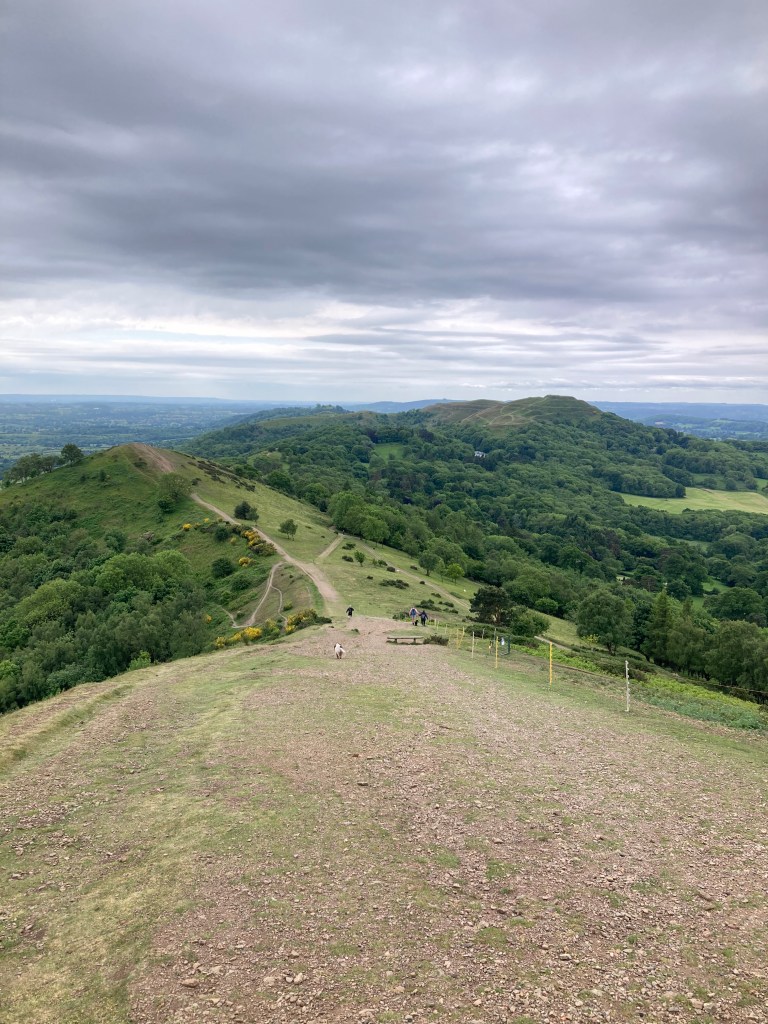
View walking down from the Worcestershire Beacon, south.
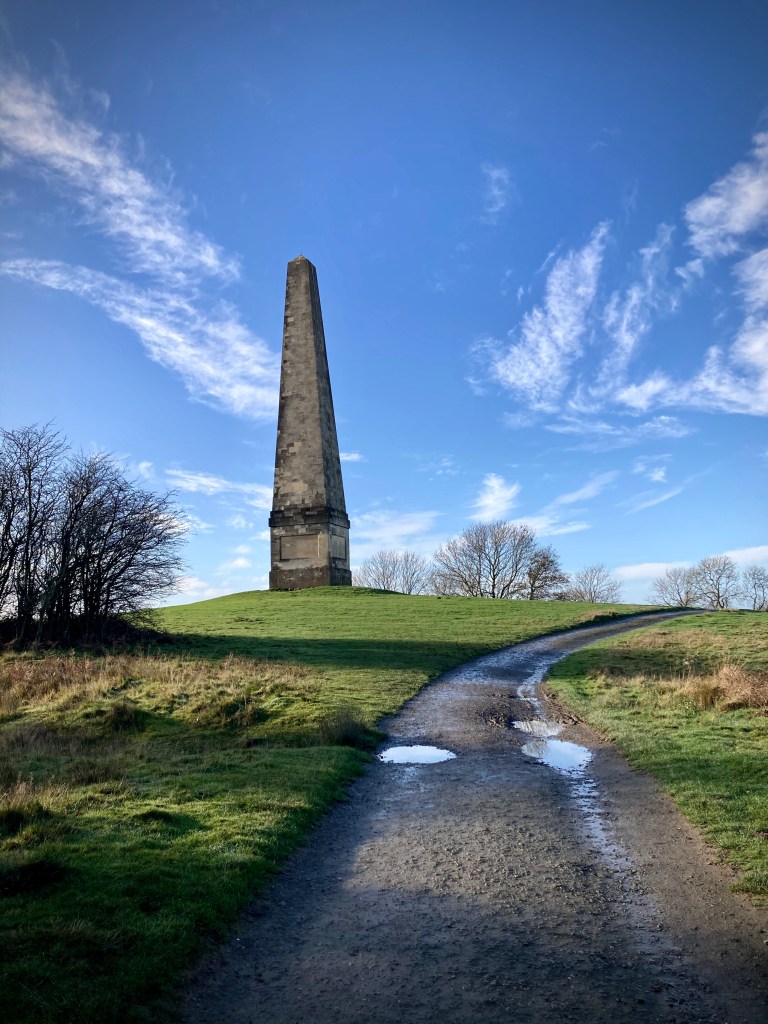
The 90 foot Eastnor Obelisk, erected in 1812 by the Somers Cocks family.
Thanks for being here. Let’s see where this takes us.
| Suggested Link | |
|---|---|
| Malvern Hills | Malvern Hills Trust |
| Worcestershire Beacon | Visit Worcestershire Beacon |
| British Camp | British Camp – Wikipedia |
| Edward Elgar | Edward Elgar – Elgar Foundation |
| Caractacus (Elgar’s cantata) | Caractacus – Wikipedia |
| Malvern Priory | Great Malvern Priory |
| Eastnor Obelisk | Malvern Beacon – Eastnor Obelisk |
 Notes from Foggy Albion: A Journey Through Nature & Plant-Based Living In Britain
Leave a comment