

Back When Bread Was Still Bread
I was lucky enough to grow up in the seventies and eighties, a time when music was better, cars were more interesting and proper, good, wholesome bread could still be found on most high streets in independent bakeries. The full-scale decline hadn’t yet set in. Bakeries were already on the breadline, but the rise of large out-of-town supermarkets in the seventies, the dominance they really started to hold over towns and cities in the eighties, and the cut-throat loss-leaders and price wars of the following decades had yet to have their truly crippling effect.
Most areas still had local bakeries where a decent loaf could be purchased at a reasonable price. The soft, mushy, chemical-laced imitation, shrouded in plastic, was more readily available on supermarket shelves. And although bakeries also did standard white sliced, they offered more traditional options too – and, arguably, better quality.
[Pics and video below]
Granary Memories and Banana Butties
Growing up in the countryside, we had a local bakery not too far from the farm, and bread was delivered daily throughout the area by the baker himself, along with the daily newspaper. Freshly cooked and still warm, granary bread would arrive in a retro vintage baker’s van – an interesting gimmick that was a nice touch, but failed to increase sales in any significant quantity.
That granary was delicious as toast, bathed in butter, but for some reason this particular loaf was best used for banana butties. A couple of thick slices, bountiful quantities of butter, and then a banana crushed roughly between the two slices. It worked a treat and totally hit the spot. Whilst man, or woman, cannot live on bread alone, it certainly can be a valuable and welcome addition to anyone’s daily diet.
Bread: A 14,000-Year-Old Staple
Apparently, bread has its roots in a time long before the last ice age – more than 14,000 years in the making. Back then, our ancestors likely broke bread with one another using unleavened flatbreads. Since those earliest loaves, it’s evolved into a staple food across countries and cultures.
From the Aerated Bread Company’s innovations in the late 1800s to the nadir of the Chorleywood bread process in the sixties, British bread-making lost its way. It hit a low point, in my opinion, in the late 20th and early 21st century, when supermarkets started offering white-sliced loaves for as little as 10 pence. At first, I was impressed – it felt like a food price revolution. I confess, I took advantage of what appeared to be a bargain.
But as with all things that seem too good to be true – it was.
When Bread Got Too Cheap
There’s no such thing as a free lunch. Selling food at that price means someone, or something, is paying the price somewhere else. These bargain loaves, moreish and irresistible loss-leaders, contributed to driving small bakers out of business – brown bread, quite literally. Meanwhile, the nation’s health suffered. Many of these cheap loaves were, allegedly, nutritional deserts. Heavily refined white flour, sugar and salt appeared to be the main ingredients, along with, often, a plethora of even less desirable additives.
Things were even worse in the Far East. Living in Thailand in the nineties, I witnessed such crimes against baking and good taste as chocolate bread, with the crusts pre-removed, wrapped in glossy plastic and bearing only a distant resemblance to what most think of as bread.
My Homemade Bread Awakening
My personal bread revolution began not long after. I started cutting down on bread and choosing better quality when I did buy it. “Lower quantity, better quality” became my mantra – my daily bread, if you will. The greatest thing since sliced bread, for me, was a return to a more traditional loaf.
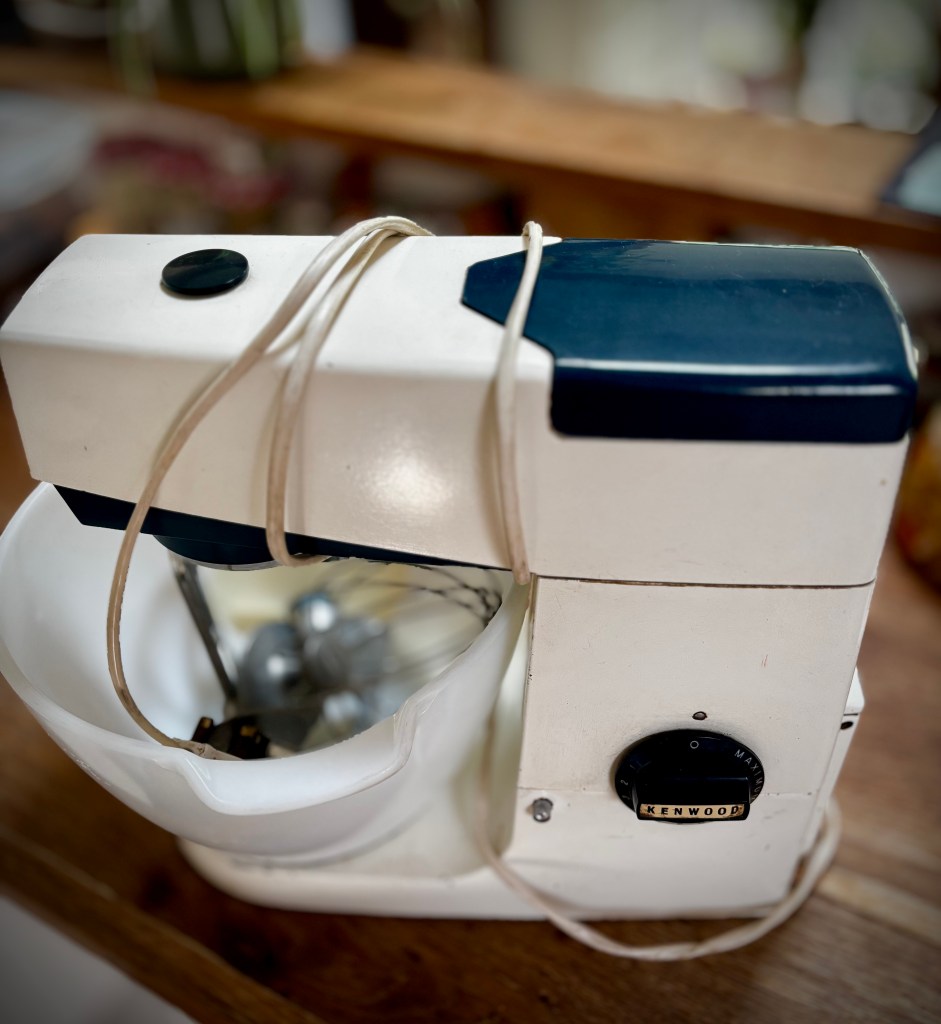
So, digging out my trusty Kenwood A701A, I set out to learn the ancient art of bread making. Quick side note; I must pay homage to this legend of the kitchen. This Kenwood is actually older than me, bought by my parents in the late sixties – the decade prior to my arrival on planet earth. I acquired it as the spoils of their divorce in the nineties. It’s still going strong – fingers crossed here – and has never had any issues. The grinding attachment was lost and the liquidising/blending attachment got dropped and cracked, both parts easily replaceable, should I wish to pony up the requisite rhino. It was made in England, at a time when things were still built to last – it has been used regularly every decade since purchase and never missed a step.
I tried mixing and kneading and various different methods and bread mixes, and followed all manner of online and recipe book suggestions; some simply beyond my somewhat limited abilities and others rather half-baked. My first few loaves came out more weapon than sustenance – dense enough to use as doorstops, and could injure someone at 20 paces, if thrown.

Perseverance and patience are the watchwords.
Finally, I settled, or perhaps stumbled, upon my own creation, a sort of fusion of various recipes and techniques. Starting it in the mixer, it then gets transferred to the board for some old-fashioned hand kneading, on oil rather than more flour. I generally use a mix of flours, usually wholemeal, accompanied by either rye, khorasan or spelt. I’ve never actually managed to faithfully reproduce the granary bread of my youth, but I’ve found that toasting a mix of seeds (usually pumpkin, flax, sesame and sunflower) and adding them at the kneading stage produces quite a nice bread. It’s taken years of trial and error, but I’ve finally arrived at a loaf I’m genuinely proud to eat, and even serve up to guests.
Ditching Shop-Bought Pizza and Focaccia
Ready-made pizzas are a thing of the past too. A simple recipe for pizza dough and a little patience can deliver delicious results. In my opinion, far superior to any of the shop-bought offerings and free from additives and other nasty unknowns. Once you’ve had a good homemade pizza, the cardboardy offerings of many outlets and frozen options feel like a disappointment you can do without.
Staying with Italian delicacies, I’ve also discovered how to knock out a halfway presentable focaccia. I try not to do this too often – not because of the effort involved, but because my self-control goes out the window. One piece leads to another and then more, and let’s just say there’s only so much olive oil and salt one should consume in a single sitting.


Breaking Bread Without Breaking the Bank
Another win for homemade bread? It’s affordable. Even with organic flour, seeds, and oils (most of the time), I can make a loaf for just under a quid. Go for basic ingredients and it’s even cheaper. Same for pizza and focaccia – cheap as chips, and every bit as tasty.
The Perfect Banana Loaf Still Eludes Me…
I’m still searching for the perfect accompaniment to a banana, like the granary bread of my youth. But what I’ve created is good enough – at least for me. I’m no Bake Off contender, but I’ll keep punching dough, breathing in the scent of fresh bread filling the kitchen, and diving into the first buttery crust while it’s still warm (vegan butter these days).
I’m still searching for the perfect accompaniment to a banana, like the granary bread of my youth. But what I’ve created is good enough – at least for me and for now. I’m certainly no Bake Off contender, but I’ll keep punching the dough and enjoying the delicious smell of freshly baked bread that fills the kitchen every time, and diving into the first buttery crust while it’s still warm (vegan butter these days).
Happy baking!
 Notes from Foggy Albion: A Journey Through Nature & Plant-Based Living In Britain
Leave a comment