


Yesterday afternoon, the air above my usually quiet bit of the British countryside was thick with smokey fog of burning vegetation.
A field fire that roared rapidly across the parched remnants of a recent wheat and hay harvest, consumed first stubble, then hedgerow, and fencing followed. In the now uncomfortably regular season of wildfires across the world, particularly the Northern Hemisphere, this one was small beer. But, it gave me an unpleasant, though tiny, taste of what it feels like to experience a wildfire.


Currently, the best guess as to the cause of the fire is a muck heap that might have spontaneously combusted due to the relentlessly dry weather – July was the driest since 1976 in Worcestershire, apparently. Fed by these bone-dry conditions and the fact we’ve had no meaningful rain for weeks, even months, the fire spread rapidly – fanned by a strong breeze. In no time at all, it escalated from ignition through wheat stubble, to garden, to hedge, to hay stubble and beyond. At one point, worryingly close to a neighbour’s house.
The smell of charred grass and scorched earth filled the air. The neighbour, whose house was most at risk, called me, knowing I was further down the fields preparing for the second stage of pond digging. Leaping over a fence and running the most direct route to the top, to unlock gates for the fire brigade, within minutes the same route I’d taken was engulfed in flames. My main concerns were another neighbour’s horses, into whose territory the fire was in danger of spreading, and eventually did, and a small group of a dozen uninvited migrant sheep on my land. Try as I might, I couldn’t get the infuriating creatures to exit the way I assumed they had arrived.
Huge credit to the men and women of the Hereford and Worcester Fire and Rescue Service (HWFR). Within minutes the first fire engines had arrived. Realising the potential of what they were faced with, they quickly drafted in extra help. Fire engines and a water tanker came from Worcester, Bromyard, Droitwich and Birmingham. As each engine emptied its load, they pulled out of the fields and refilled from a mains connection across the main road, in the village.
By 19:30, and with the help of the tenant farmer’s tele handler with a large bucket to spread the muck heap, the crews had beaten the blaze; their thermal imaging scanners only picking up the occasional fence post with a stubborn flame. They sent a crew back at about 22:30 to do a final check.

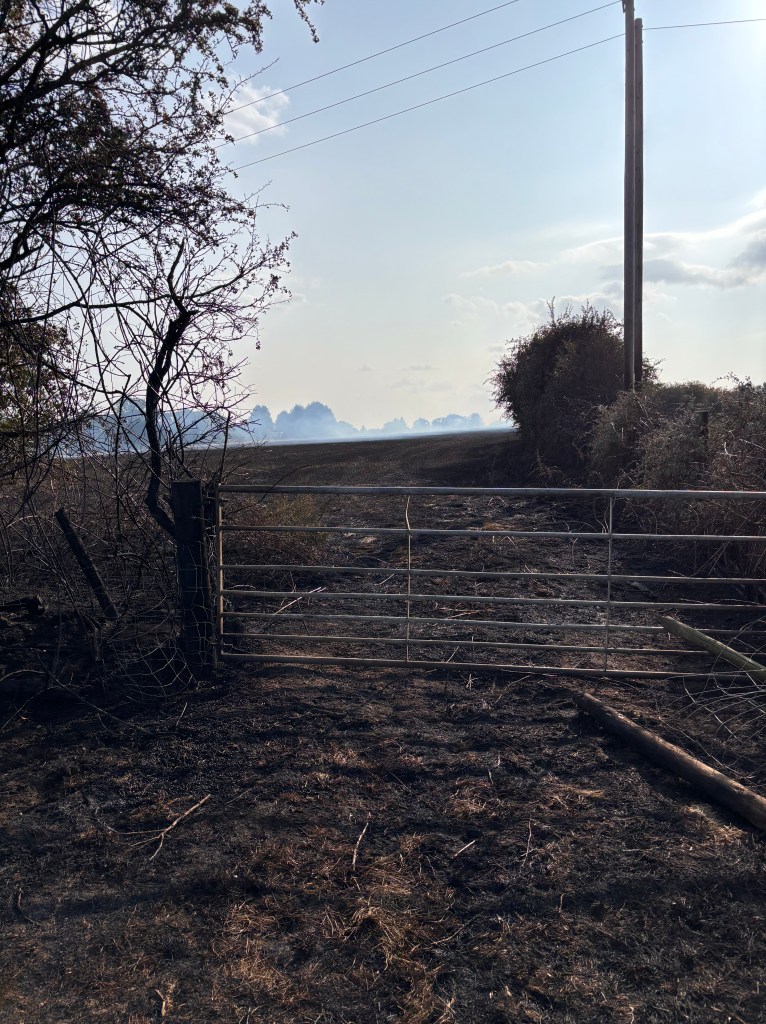
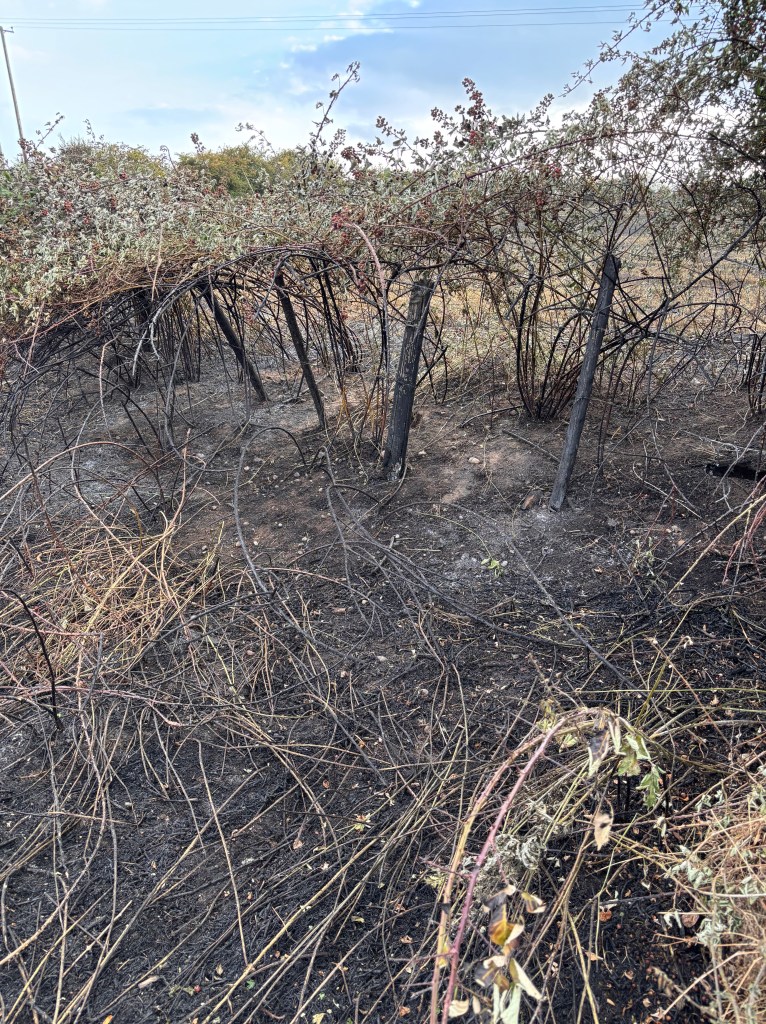
There are now acres of black in place of golden stubble. The hedges blackened and cleared of scrub. In a way, it was reminiscent of my early years, when stubble burning was still acceptable practice (banned in the early nineties I believe). Back then, the headlands would all be ploughed to create a natural barrier and fire break. Yesterday’s uncontrolled blaze, instead of extending as far as ploughed earth and stopping, met hedges, tinder-dry and ready to fry.
Walking across the land for a final check last night, before heading back to Herefordshire, I noticed a rabbit hopping gingerly between the charred remains, below the scorched hedges. The horses and itinerant sheep got through it with nothing more than a bit of stress, but I can’t help feeling there were many smaller casualties that will go unnoticed.
 Notes from Foggy Albion: A Journey Through Nature & Plant-Based Living In Britain
Leave a comment